Affordable dental implants in Indianapolis, IN, are often made possible through phased treatment, different restoration designs, financing, or dental benefits. The lowest advertised fee is not always the lowest total cost, so the most useful comparison is a written estimate that includes the implant, abutment, final crown or denture, imaging, and any needed preparatory care.
Implants can replace one tooth, several teeth, or help support a denture or full-arch restoration. A clinical evaluation is necessary because bone support, gum health, general health, and the planned restoration all affect candidacy, treatment steps, and cost.
If you're weighing options to replace missing teeth, a personalized assessment of dental implants can clarify candidacy, cost drivers, and which restoration design best fits your goals. Wagner Sleep Dental in Indianapolis, IN, combines that evaluation with clear written estimates so you can compare implant, abutment, and restoration costs with confidence.
A dental implant is a small post, usually titanium, placed in the jawbone to replace a tooth root. After the bone heals around the implant, an abutment connects it to a crown, bridge, or removable or fixed denture.
A complete quote should identify each stage of care. Ask whether it includes the consultation, X-rays or cone-beam CT imaging, extractions, bone grafting, implant placement, temporary teeth, abutments, the final restoration, sedation, and follow-up visits.
Some offices advertise only the surgical implant post. Request an itemized estimate for the full course of care and ask which costs could change after imaging or surgery.
The dentist evaluates missing teeth, bite forces, gum condition, available bone, and nearby structures such as nerves and sinuses. Imaging helps determine implant position and whether bone grafting or another preparatory procedure may be needed.
Your health history also matters. Uncontrolled diabetes, active gum disease, tobacco or nicotine use, immune suppression, certain medications, and prior radiation to the jaws can affect healing, though they do not automatically rule out treatment in every case.
The evaluation also depends on the final tooth design. Replacing one tooth with a crown requires a different plan than stabilizing a lower denture or restoring a full arch.
The most economically appropriate option depends on how many teeth are missing and whether nearby teeth can be preserved. Fewer implants do not always create the best long-term result, so durability, hygiene access, bite stability, and repair needs should be weighed alongside price.
Treatment | Common Use | Cost Considerations | Key Limitation |
|---|---|---|---|
Single implant and crown | One missing tooth | Priced per site and restoration | May require grafting |
Implant-supported bridge | Several adjacent missing teeth | Can replace multiple teeth with fewer implants | Cleaning beneath the bridge is essential |
Implant-retained removable denture | Loose or unstable denture | Often less costly than a fixed full arch | Must usually be removed for cleaning |
Fixed full-arch restoration | Most or all teeth in an arch | Higher surgical and laboratory cost | Repairs and long-term maintenance can add expense |
A conventional bridge or removable partial denture may cost less at first and may be appropriate in some cases. Unlike an implant, dental bridges generally use neighboring teeth for support, while removable dentures rest partly on teeth and gums.
Dental insurance may help with examinations, extractions, grafting, or the restoration even when it does not cover the implant itself. Check annual maximums, waiting periods, missing-tooth clauses, network restrictions, and whether benefits can be coordinated across calendar years without delaying needed care.
Other options may include in-office payment plans, third-party financing, health savings accounts, flexible spending accounts, and accredited dental school clinics. Financing can reduce the upfront payment, but it may increase the total paid through interest or fees.
Phased treatment can spread costs when it is clinically appropriate. For example, disease may be treated first, implants placed later, and the final restoration completed after healing, though long delays can allow tooth movement or bone changes.
Be cautious with quotes that omit essential components or promise candidacy without an examination. Compare the clinician's training, materials, follow-up policy, warranty terms, emergency access, and expected maintenance rather than choosing on price alone.
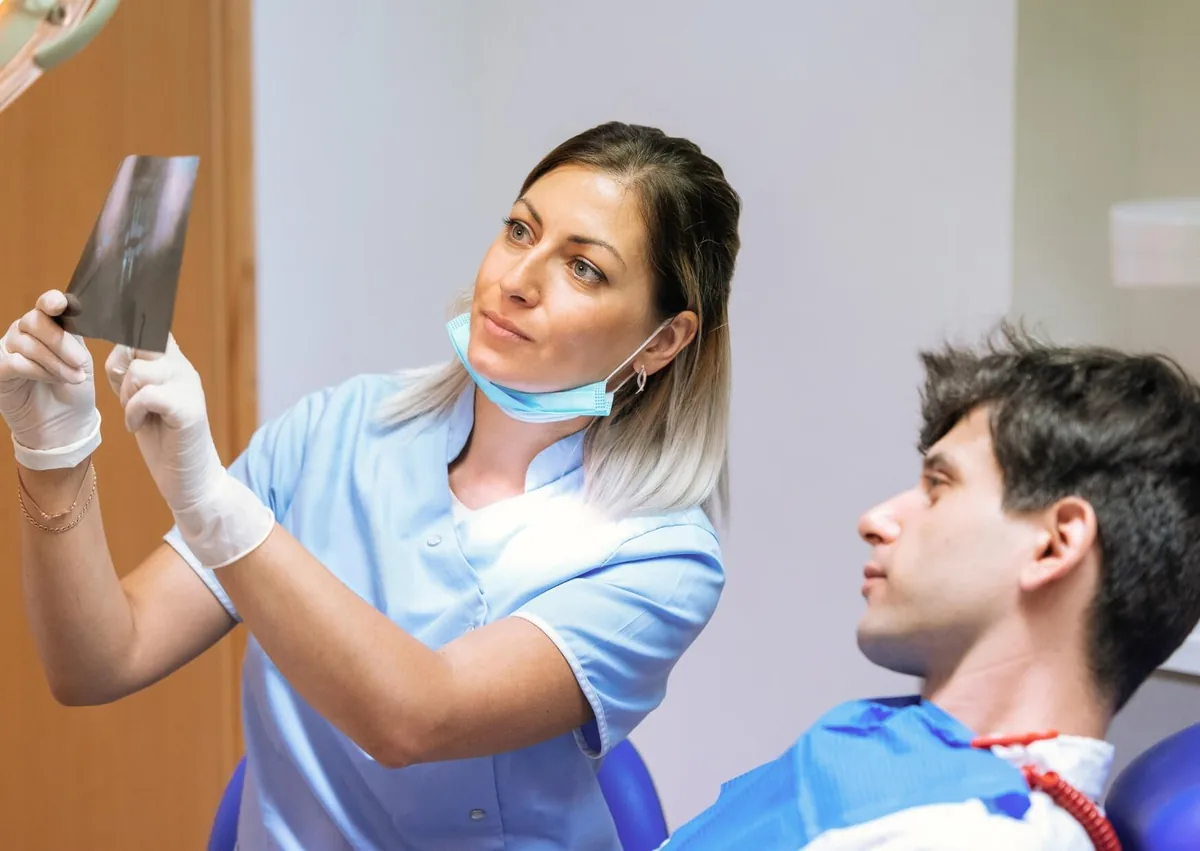
If you need to extract a tooth or a bone graft is needed, healing may occur before implant placement or at the same time, depending on the site. After placement, the implant often needs several weeks to months to integrate with bone before it supports the final tooth, although immediate temporary teeth are possible in selected cases.
Temporary swelling, bruising, tenderness, and minor bleeding can occur after surgery. Follow the treating clinician's instructions for food, oral hygiene, activity, prescribed medication, and use of any temporary appliance.
Contact the dental office promptly for worsening pain after initial improvement, persistent bleeding, increasing swelling, fever, pus, a bad taste, an unstable implant, or a bite that suddenly feels different. Seek urgent medical care for trouble breathing or swallowing, rapidly spreading facial or neck swelling, uncontrolled bleeding, or severe systemic illness.
Implants cannot develop cavities, but plaque around them can lead to inflammation and bone loss called peri-implant disease. Daily cleaning around the implant and restoration, regular professional care, and management of gum disease help protect the result.
Regular periodontal hygiene and ongoing professional monitoring are important for long-term success. Smoking or nicotine use, poorly controlled diabetes, tooth grinding, and missed maintenance visits may increase the risk of complications.
A protective night guard may be recommended when grinding places excessive force on the restoration. Implant components and attached teeth can also loosen, chip, or wear over time, so future maintenance should be part of the budget.
A thorough consultation and written plan can clarify which option offers a reasonable balance of health, function, appearance, and long-term cost.
To get a personalized written estimate and timeline for dental implants, arrange a consultation that includes imaging and a review of restorative options. Call Wagner Sleep Dental for dental implants in Indianapolis, IN, and nearby Greenwood, IN, at (317) 881-4000 to schedule your visit or ask about same-day availability.
Costs vary widely because a single implant crown, an implant-supported bridge, and a full-arch restoration involve different procedures and materials. Imaging, extractions, grafting, sedation, temporary teeth, and follow-up care can also change the total, so a personalized written estimate is more useful than a general price range.
Some plans cover part of implant treatment, while others cover only related services or the final crown or denture. Review exclusions, annual limits, waiting periods, network rules, and preauthorization requirements before treatment.
A lower price does not by itself mean poor care, but treatment should still include appropriate diagnosis, sterile surgery, suitable materials, a well-designed restoration, and follow-up. Ask for the clinician's credentials, complete scope of treatment, expected outcome, and policy for complications or repairs.
Implants and temporary teeth can sometimes be placed on the same day, but bone quality, infection, bite forces, and overall health determine whether that approach is appropriate. The implant still requires biological healing, and the permanent restoration may be delivered later.
Bone grafting may improve support in some cases, while shorter implants or a different restoration design may sometimes avoid extensive grafting. Imaging and an examination are needed to determine which options are clinically reasonable.
I have gone here for dental work my whole life at this point, and they have never been rude to me and have always been patient with me when I... read more

 nick lorance
Update 10/8/24: Again I can’t express enough how pleased I am with Dr Wagner and her staff, especially Linda my hygienist! She is thorough and gentle when working on my... read more
 Cyndi Maddox (Cyndi)
Everything went well.. the staff is so friendly. Susan (the dentist) takes time to explain what all is going in and does not rush you out the door. ... read more
 Pam Stultz
Consistently pleased with the kindness I’m met with by the staff and the quality of my routine cleanings
 Lukas Smith
Nothing but positive things to say about this place! Every staff member I've interacted with is knowledgeable and kind. Going to the dentist no longer makes me anxious. I highly... read more
 Laura Moon
Jennifer, Dental Hygienist was thorough with my exam and cleaning! Thank You, Jennifer!
 Amber Nugent
The kindest group of ladies you’ll ever find from reception to dentist. I hadn’t been to the dentist in about 5 years (due to fear among other things). I finally... read more
 Hayden Phillips
Always great to see the beautiful staff at Dr Susan Wagner’s office. Always a pleasant experience when I visit for any procedure. I highly recommend Dr Susan if... read more
 celine masterson
I hadn't been to the dentist in 10 years and hadn't really smiled for about the same. Dr. Wagner and her staff made me feel comfortable instantly. She is not... read more
 Rachael Manson
Success stories that speak for themselves