The typical single tooth implant cost in the United States is about $3,000 to $6,000 in total cost for the implant, abutment, and crown. The total may be higher if care includes an extraction, bone graft, sedation, temporary tooth, or treatment for gum disease, so a dental examination and written estimate are needed for an accurate figure.
Considering replacing a missing tooth with a long-term solution, learning about dental implants can clarify which steps, costs, and timing apply to your case. Wagner Sleep Dental in Indianapolis, IN explains implant options and likely expenses so you can get a clear estimate for your situation.
A complete implant restoration has three main parts. The implant is a titanium or ceramic post placed in the jawbone, the abutment connects the implant to the replacement tooth, and the dental crown is the visible tooth-shaped restoration.
Not every office bundles these parts the same way. One estimate may list only implant placement, while another includes imaging, the abutment, and the final crown.
Cost Component | Typical Purpose | Often Listed Separately? |
|---|---|---|
Examination and imaging | Evaluates bone, teeth, gums, and anatomy | Yes |
Implant placement | Places the post in the jaw | Sometimes |
Abutment | Connects the implant and crown | Sometimes |
Implant crown | Replaces the visible tooth | Sometimes |
Additional procedures | Prepares or protects the treatment site | Usually |
National ranges are only general references. Your actual fee depends on location, materials, case difficulty, and what the estimate includes.
The condition of the treatment site is one of the biggest cost factors. If the tooth is still present, a tooth extraction may be needed (see tooth extraction time).
If the jawbone is thin or damaged, grafting may be needed before or during implant placement. That can add time, materials, and follow-up visits.
The tooth location also matters. Front teeth may need more cosmetic planning for gum shape and appearance, while back teeth must handle stronger chewing forces.
A cone-beam computed tomography scan, or CBCT scan, creates a three-dimensional view of the jaw. It helps the dentist assess bone width and nearby structures such as nerves or sinus spaces, but it may be billed separately.
Other possible costs include sedation, a temporary tooth, treatment for active gum disease care, and specialist involvement. Ask whether the estimate covers the complete restored tooth, not only the implant post.
The dentist reviews your medical history, medications, tobacco or nicotine use, and conditions that may affect healing. The exam also checks the missing-tooth space, bite, gum health, neighboring teeth, and signs of infection or bone loss.
Dental X-rays are usually required, and a CBCT scan may also be recommended. These findings help determine implant size, implant position, and whether grafting or staged treatment is needed.
A responsible estimate should list expected procedures, materials, professional fees, and possible added costs. It should also explain whether follow-up visits and early complication management are included.
An implant is not the only way to replace one missing tooth. The right option depends on oral health, the condition of nearby teeth, appearance goals, chewing needs, treatment time, maintenance, and budget.
Option | Main Advantage | Important Limitation |
|---|---|---|
Single implant and crown | Does not rely on adjacent teeth for support | Requires surgery, healing time, and enough bone |
Fixed dental bridge | May restore the space without implant surgery | Usually requires reshaping neighboring teeth |
Removable partial denture | Often has a lower initial cost | Removable and may feel less stable |
No replacement | Avoids immediate treatment expense | Teeth may shift, and chewing or appearance may be affected |
A bridge can make sense if neighboring teeth already need crowns. An implant may be more conservative when those teeth are healthy because it replaces the missing tooth without cutting them down.
Dental insurance may cover part of the exam, extraction, graft, abutment, or crown, but coverage varies widely. Some plans exclude implants or apply annual maximums, waiting periods, missing-tooth clauses, or frequency limits.
Ask for procedure codes and a written, itemized treatment estimate. A pretreatment estimate from the insurer can help clarify expected benefits, although it is not always a guarantee of payment.
Health savings accounts and flexible spending accounts may be usable for eligible dental expenses under plan rules. Payment plans or third-party financing may also be available, but patients should review interest, fees, deferred-interest terms, and refund policies carefully.
Implant treatment often takes several months because the bone needs time to attach to the implant surface, a process called osseointegration. Some patients can receive an implant at the time of extraction or wear a temporary tooth soon after surgery, but that is not appropriate in every case.
Stage | What Usually Happens | General Timing |
|---|---|---|
Evaluation | Examination, imaging, and treatment planning | One or more visits |
Site preparation | Extraction or grafting if needed | Before or with implant placement |
Implant placement | Post is positioned in the jaw | One procedure |
Healing | Bone integrates with the implant | Often several months |
Final restoration | Abutment and crown are fitted | After adequate healing |
Grafting, infection, medical factors, or staged treatment can extend the timeline. The dentist should explain what can be worn in the space during healing and whether that temporary option is included in the price.
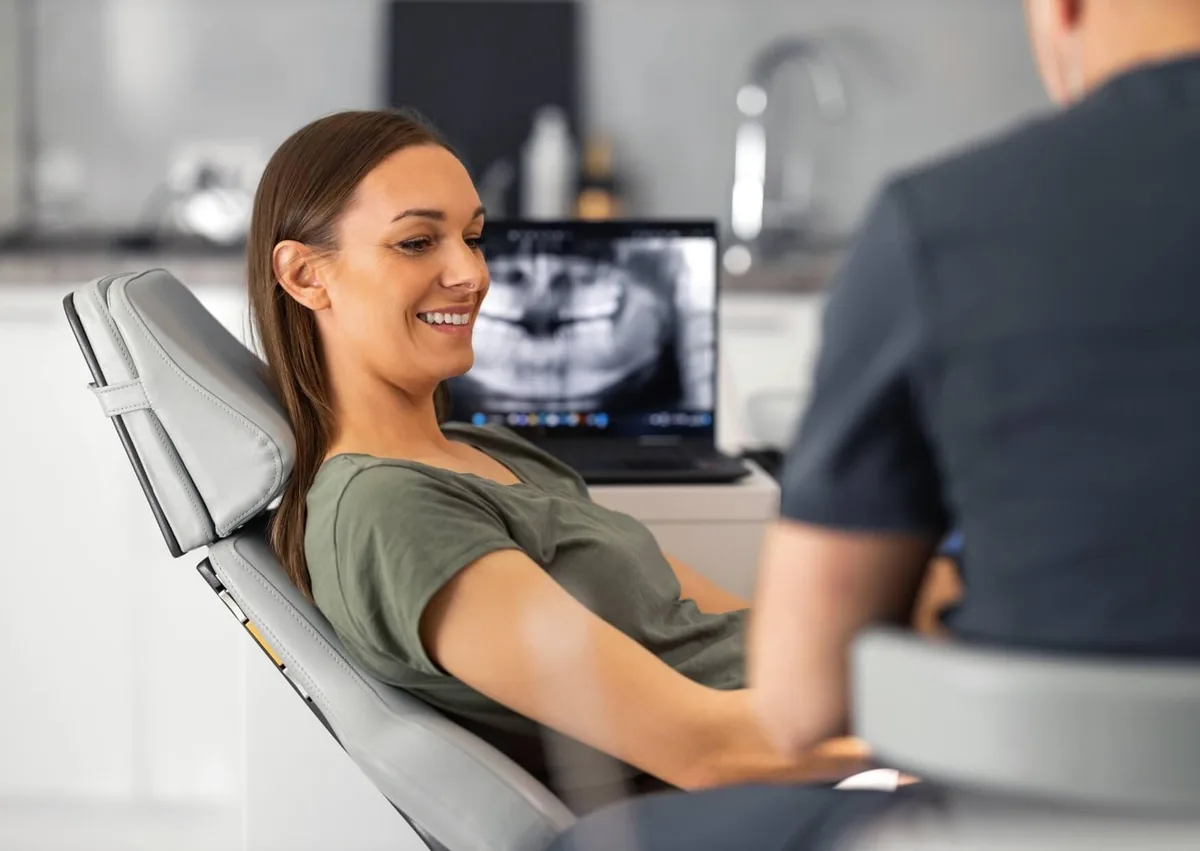
Mild swelling, tenderness, bruising, and light bleeding can happen after implant surgery. These symptoms often improve over several days.
Follow the treating clinician's instructions for eating, cleaning, activity, and medicines. Advice depends on the procedure performed and your medical history.
Once restored, an implant cannot get a cavity, but plaque can still inflame the surrounding gums and bone (see how to fix gingivitis). Daily brushing, cleaning around the implant, regular professional care, and avoiding tobacco or nicotine help lower the risk of peri-implant disease.
Seek prompt dental guidance for pain or swelling that persists or worsens, a loose implant or crown, pus, a bad taste, gum recession, or difficulty biting (learn about gum recession causes). Get urgent care for rapidly spreading facial swelling, trouble breathing or swallowing, uncontrolled bleeding, fever with worsening oral swelling, or swelling near the eye.
The best cost comparison looks at the full treatment plan, likely maintenance, and the health of the surrounding teeth and gums. Learn about our dental implants services to review treatment steps and consultation options.
If you want a personalized estimate and timeline for a single tooth, a consultation will confirm whether dental implants are appropriate and which costs apply. Call Wagner Sleep Dental, focused on dental implants in Indianapolis, IN and serving Greenwood, IN, at (317) 881-4000 to schedule a visit.
It may cover only the implant post or another single stage. Ask whether the quote includes imaging, surgery, abutment, crown, temporary tooth, follow-up care, and any needed extraction or graft.
Differences may reflect regional fees, clinician training, specialist involvement, implant system, crown material, imaging, sedation, laboratory work, and case complexity. Comparing itemized estimates is more useful than comparing one advertised number.
Some plans cover a percentage of certain stages, while others exclude implants or apply annual limits and waiting periods. Requesting a pretreatment estimate can help clarify the plan's expected contribution.
An implant may function for many years with healthy bone, effective plaque control, routine dental care, and management of bite forces. The crown may wear, chip, loosen, or eventually need replacement even when the implant remains stable.
Price alone does not establish quality or safety. A sound plan should include appropriate imaging, infection and gum assessment, suitable materials, clear follow-up arrangements, and treatment by a properly licensed clinician.
Dr. Susan Wagner and her staff are amazing. They are very professional, gentle, efficient and experienced. They are also calm and very kind. I appreciate having such a great experience... read more

 Amy Tomey
I love going to this dental office. Dr. Wagner and her staff are very caring. They do a great job and explain the procedures well.
 Amy Studebaker
Always great to see the beautiful staff at Dr Susan Wagner’s office. Always a pleasant experience when I visit for any procedure. I highly recommend Dr Susan if... read more
 celine masterson
I am so glad to see my dentist and Jennifer the hygenist! My name happens to be identical with the dentist, but I am just a patient! Jennifer... read more
 Susan Wagner
Update 10/8/24: Again I can’t express enough how pleased I am with Dr Wagner and her staff, especially Linda my hygienist! She is thorough and gentle when working on my... read more
 Cyndi Maddox (Cyndi)
We’re kind and personable yet professional! Took time with me to explain what I needed done.
 Patricia Duncan
I have gone here for dental work my whole life at this point, and they have never been rude to me and have always been patient with me when I... read more
 nick lorance
Everything went well.. the staff is so friendly. Susan (the dentist) takes time to explain what all is going in and does not rush you out the door. ... read more
 Pam Stultz
Nothing but positive things to say about this place! Every staff member I've interacted with is knowledgeable and kind. Going to the dentist no longer makes me anxious. I highly... read more
 Laura Moon
Success stories that speak for themselves