Dental implant recovery usually involves a few days of soreness and swelling, followed by several months of deeper healing in the bone. Many people return to normal daily activities within one to three days, but the implant still needs time to bond with the jaw before it can support a permanent tooth.
Recovery time depends on the implant location, whether grafting or extraction was needed, your bone health, and your medical history.
If you're weighing options for replacing a missing tooth or worried about recovery, dental implants can offer a long-term solution tailored to your needs. Wagner Sleep Dental in Indianapolis, IN supports patients through each step of implant recovery with personalized care and clear aftercare guidance.
Dental implants are titanium or ceramic posts placed in the jaw to replace a tooth root. After placement, the surrounding bone gradually bonds to the implant through osseointegration, which creates the stability needed for chewing.
The gums often heal faster than the bone. That means the area may look better before the implant is fully stable, which is why follow-up visits and temporary diet limits matter.
Some treatment plans also include bone grafting, tooth extraction, or sinus augmentation. If your case requires the dentist to extract a tooth, healing from that procedure can affect the overall implant timeline.
Healing does not follow the exact same schedule for every patient. This timeline reflects common patterns, not guaranteed milestones.
Recovery Stage | Common Experience | Typical Precautions |
|---|---|---|
First 24 hours | Oozing, tenderness, and early swelling | Protect the blood clot, rest, and avoid disturbing the site |
Days 2 to 3 | Swelling may peak; bruising can appear | Use prescribed aftercare and eat soft foods |
Days 4 to 7 | Pain and swelling should begin improving | Clean carefully and avoid chewing on the implant side |
Weeks 1 to 2 | Gum tissue continues closing; sutures may dissolve or be removed | Attend follow-up care and add foods only if cleared |
About 3 to 6 months | Implant bonds with the jawbone | Avoid overloading the implant until the dentist confirms stability |
Final restoration | An abutment and crown, bridge, or denture may be attached | Maintain daily hygiene and routine dental monitoring |
The exact sequence depends on whether the implant is covered by gum tissue, fitted with a healing cap, or restored right away with a temporary tooth. A temporary tooth is usually meant for appearance, not full chewing force, unless the dentist tells you otherwise.
Mild to moderate soreness, light bleeding, swelling, bruising, and jaw stiffness are common after implant surgery. These symptoms should usually level off and then improve, not become worse each day.
Call the dental office promptly if pain or swelling worsens after early improvement, bleeding does not slow with the recommended pressure, or the implant or temporary tooth feels loose. Persistent bad taste, pus, fever, gum recession around the implant, or other signs of a problem such as numbness that does not improve also need professional evaluation.
Seek urgent medical care for difficulty breathing or swallowing, rapidly spreading swelling of the face or neck, uncontrolled bleeding, fainting, or signs of a serious allergic reaction. Severe or unclear symptoms should not be managed with home care alone.
At follow-up visits, the dentist or oral surgeon checks the gums for closure, inflammation, drainage, and tissue changes. The bite may also be evaluated to see whether a temporary restoration is placing too much pressure on the implant.
Dental X-rays can help assess the bone around the implant and reveal changes below the gumline. Before placing the final restoration, the dentist may also use clinical measurements or a stability test to confirm that integration is strong enough.
If healing is delayed, the dentist considers possible causes such as infection, excess bite force, poor plaque control, smoking or nicotine use, uncontrolled diabetes, limited bone support, or certain medications and health conditions. These risk factors can increase the chance of implant complications or failure.
An implant that stays mobile may not have integrated properly. That finding needs prompt professional evaluation.
When healing is on track, treatment usually involves monitoring, careful home care, and protection from excess force. Once the implant is stable, the dentist connects it to an abutment that supports the crown or other restoration.
Minor gum irritation may improve with professional cleaning or adjustment of a temporary tooth. More significant problems may require additional imaging, bite adjustment, treatment of inflamed tissue, or a longer healing period.
In some cases, an implant that does not integrate must be removed. After the area heals, bone grafting or another implant may still be possible, depending on the cause of failure and the amount of available bone.
For anxious patients or those who want added comfort during surgery, sedation dentistry may be used during implant placement and related procedures.
During the first day, avoid vigorous rinsing, forceful spitting, straws, and touching the surgical site unless your dental team instructs you otherwise. These actions can disturb the clot and increase bleeding.
Use cold packs on the outside of the face if recommended, rest with your head elevated, and follow written instructions for prescribed or over-the-counter pain relief. Do not exceed product directions, and ask a clinician or pharmacist about safety if you have kidney disease, liver disease, ulcers, bleeding problems, pregnancy, allergies, or possible medication interactions.
Choose cool or lukewarm soft foods such as yogurt, eggs, oatmeal, soup that is not hot, and soft-cooked vegetables. Avoid hard, crunchy, sticky, spicy, or very hot foods, and chew away from the surgical area until the dentist says normal chewing is appropriate.
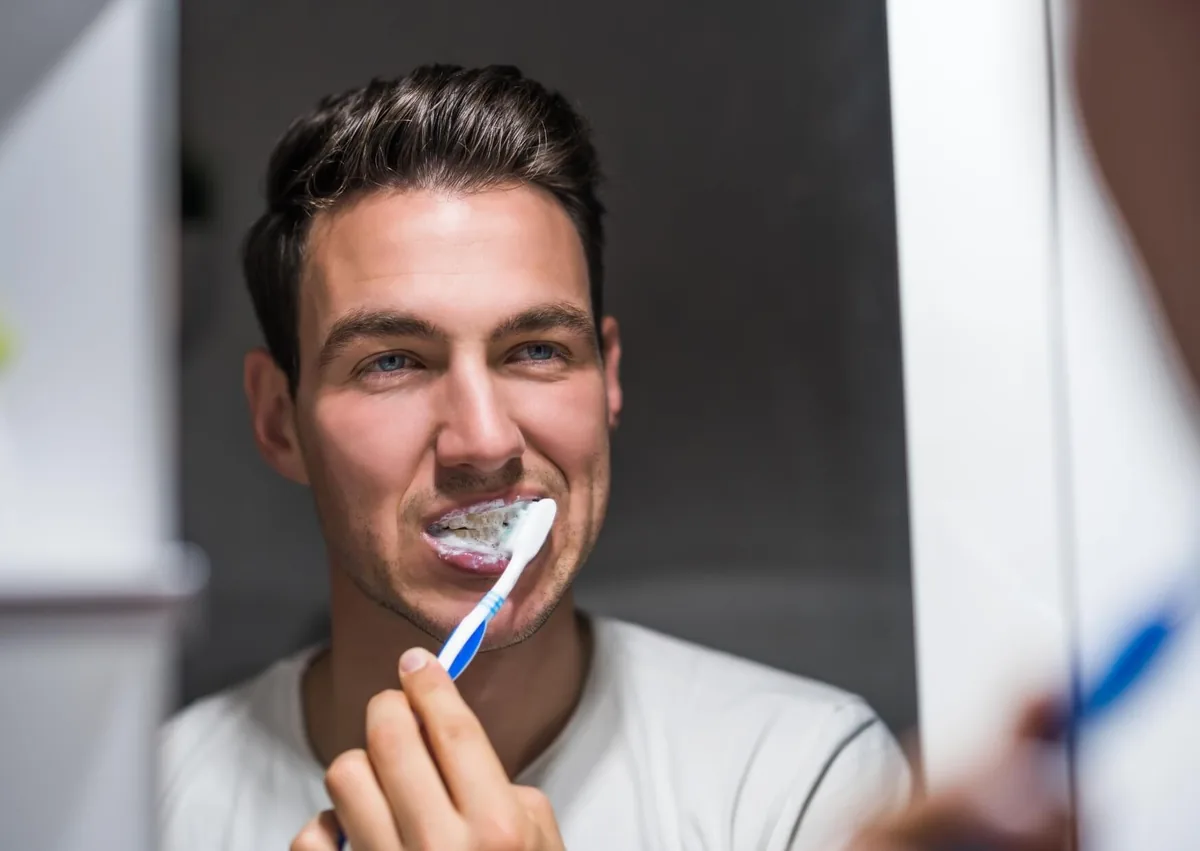
Good plaque control supports gum healing, but the area still needs gentle care. Brush the other teeth normally, clean near the implant as directed, and use only the rinses or tools recommended by your dental team during early healing.
Professional periodontal hygiene visits help reduce the risk of peri-implant disease and support long-term implant success. Smoking, vaping, and other nicotine use can reduce blood flow and are linked to slower healing and more implant complications.
After the final restoration is placed, implants still need daily brushing, cleaning between teeth or under the prosthesis, and regular professional care. Implants do not get cavities, but the surrounding tissues can develop peri-implant disease, which may lead to bleeding, bone loss, and eventual implant failure.
Contact the treating office whenever recovery is getting worse, lasting longer than expected, or becoming hard to interpret. Early evaluation can help separate routine healing from a problem that needs treatment.
For an evaluation or follow-up after implant placement, contact the team to confirm healing and safe restoration timing. Wagner Sleep Dental specializes in dental implants in Indianapolis, and nearby Greenwood; call (317) 881-4000 or book online to arrange a visit.
Pain is often most noticeable during the first few days and should gradually decrease. Pain that becomes severe, worsens after improving, or lasts beyond the expected course should be evaluated by the treating dentist.
Many people with desk-based work return within one to three days. More time may be needed after multiple implants, grafting, sedation, or physically demanding work, so follow the surgeon's activity restrictions.
Soft foods are commonly recommended during early recovery, with texture increased gradually as comfort improves and the dentist allows. Do not use reduced pain as the only sign that the implant is ready for hard or chewy foods because bone integration takes longer than gum healing.
Some swelling is expected and may be greatest around the second or third day. Swelling that rapidly expands, interferes with breathing or swallowing, or worsens after several days needs prompt assessment.
Yes, an implant may occasionally fail to bond with the bone or may lose support because of infection, excess force, or other factors. Movement, increasing pain, pus, or persistent swelling should be reported promptly, although only a dental examination can determine the cause.
This is my 4th cleaning day. I have never looked forward to getting dental work done but this is a very professional, friendly efficient practice. Now I look... read more

 Susan Fillmer
We’re kind and personable yet professional! Took time with me to explain what I needed done.
 Patricia Duncan
Entire team is fabulous! So welcoming and compassionate. Dr W is the BEST!!! Highly skilled at everything she offers!
 Keisa Messer
Nothing but positive things to say about this place! Every staff member I've interacted with is knowledgeable and kind. Going to the dentist no longer makes me anxious. I highly... read more
 Laura Moon
I am so glad to see my dentist and Jennifer the hygenist! My name happens to be identical with the dentist, but I am just a patient! Jennifer... read more
 Susan Wagner
The kindest group of ladies you’ll ever find from reception to dentist. I hadn’t been to the dentist in about 5 years (due to fear among other things). I finally... read more
 Hayden Phillips
I have gone here for dental work my whole life at this point, and they have never been rude to me and have always been patient with me when I... read more
 nick lorance
Update 10/8/24: Again I can’t express enough how pleased I am with Dr Wagner and her staff, especially Linda my hygienist! She is thorough and gentle when working on my... read more
 Cyndi Maddox (Cyndi)
Actually, today was one of the best cleanings I have ever had. Would love to have Linda everytime.
 Linda Clark
Success stories that speak for themselves