Sedation for dental implants can make implant surgery feel more manageable by reducing anxiety, improving comfort, and helping patients stay still during treatment. Local anesthesia still numbs the surgical area, while the right sedation approach depends on your health history, anxiety level, procedure complexity, and the training, monitoring, and legal authorization of the treating team.
If you're deciding how to replace missing teeth or preparing for implant surgery, understanding sedation choices and implant steps can help you choose the safest, most comfortable option for your situation. Wagner Sleep Dental in Indianapolis, IN coordinates sedation and implant care so treatment is tailored to your health and comfort.
Dental implant placement involves creating a precise opening in the jawbone and placing a titanium or ceramic implant. Local anesthesia prevents pain in the treatment area, but you may still notice pressure, vibration, sounds, or movement.
Sedation reduces anxiety and awareness, but it does not replace local anesthesia. It may help if you have significant dental fear, a strong gag reflex, difficulty staying still, a past traumatic dental experience, or a need for multiple implants or added surgery.
Some patients also need tooth extractions before implant placement, which can affect sedation planning. A single straightforward implant may be manageable with local anesthesia alone, while bone grafting, several implants, or a longer procedure may make sedation more helpful.
Sedation ranges from mild relaxation to full unconsciousness. Because sedation can sometimes become deeper than intended, the dental team should follow applicable sedation guidelines and be properly trained, equipped, and authorized for the method used.
The planned depth of sedation and the monitoring required are usually discussed as part of a broader sedation dentistry plan.
Option | Typical Experience | Key Practical Points |
|---|---|---|
Local anesthesia only | Awake and aware; treatment area is numb | Usually the simplest preparation and recovery |
Nitrous oxide | Awake but more relaxed; effects wear off quickly | Given through a nose mask; transportation rules vary |
Oral sedation | Drowsy and less aware; memory may be limited | Requires advance instructions and usually an adult escort |
IV sedation | Deep relaxation with limited awareness or memory | Given through a vein with continuous clinical monitoring |
General anesthesia | Fully unconscious | Reserved for selected cases and requires advanced anesthesia support |
Local anesthesia is a routine part of implant surgery, even when another form of sedation is used. The dentist checks numbness before starting and can add more anesthetic if needed.
Nitrous oxide is inhaled with oxygen and adjusted during treatment. Most patients remain responsive, and the effects often wear off quickly after the gas is stopped, although the dentist must decide when it is safe to leave or drive.
Oral sedation uses a prescribed medication taken exactly as directed. Its onset and depth are less adjustable than IV sedation, and some patients remember little of the procedure even though they are not fully unconscious.
If you want more detail on medications and instructions, read about oral conscious sedation.
IV sedation is delivered through a vein and can be adjusted during the procedure. Patients usually continue breathing on their own, but they require monitoring of oxygen level, breathing, blood pressure, heart rate, and responsiveness.
General anesthesia causes complete unconsciousness and requires a properly credentialed anesthesia professional in an appropriately equipped setting.
It is usually reserved for selected cases, such as extensive surgery, certain medical or developmental needs, or situations where lighter sedation is not appropriate.
A safe sedation plan starts with a medical review, not just a preference to be asleep. The dentist or anesthesia provider will ask about medical conditions, past anesthesia reactions, allergies, current medications and supplements, pregnancy possibility, substance use, and previous problems with dental treatment.
Conditions such as obstructive sleep apnea, heart or lung disease, poorly controlled diabetes, severe obesity, or liver or kidney disease can change sedation risk and medication handling. These issues do not always prevent sedation, but they may affect the setting, monitoring plan, or need for medical clearance.
The team also considers the number and location of implants, expected treatment length, need for bone grafting, anxiety level, and ability to cooperate. An exam may include vital signs and an airway assessment.
Bring a complete medication list, including over-the-counter products and cannabis or other substances. Do not stop prescribed medications unless the treating clinician specifically tells you to.
Preparation depends on the type of sedation and your health status. Follow the office's instructions about eating, drinking, medications, clothing, and arrival time rather than general online advice.
Oral sedation, IV sedation, and general anesthesia usually require a responsible adult to drive you home and stay available afterward. Rideshare or public transportation alone may not meet discharge rules because sedation can affect judgment, balance, and memory.
For related transportation guidance, see driving after a root canal.
Plan time away from work, childcare, and important decisions for the period your provider recommends. Avoid alcohol, cannabis, recreational drugs, and unapproved sedating products before and after treatment because they can interact unpredictably with anesthesia.
Call the office before your procedure if you develop fever, cough, breathing symptoms, vomiting, or another meaningful health change. The team may need to postpone treatment to protect your breathing and recovery.
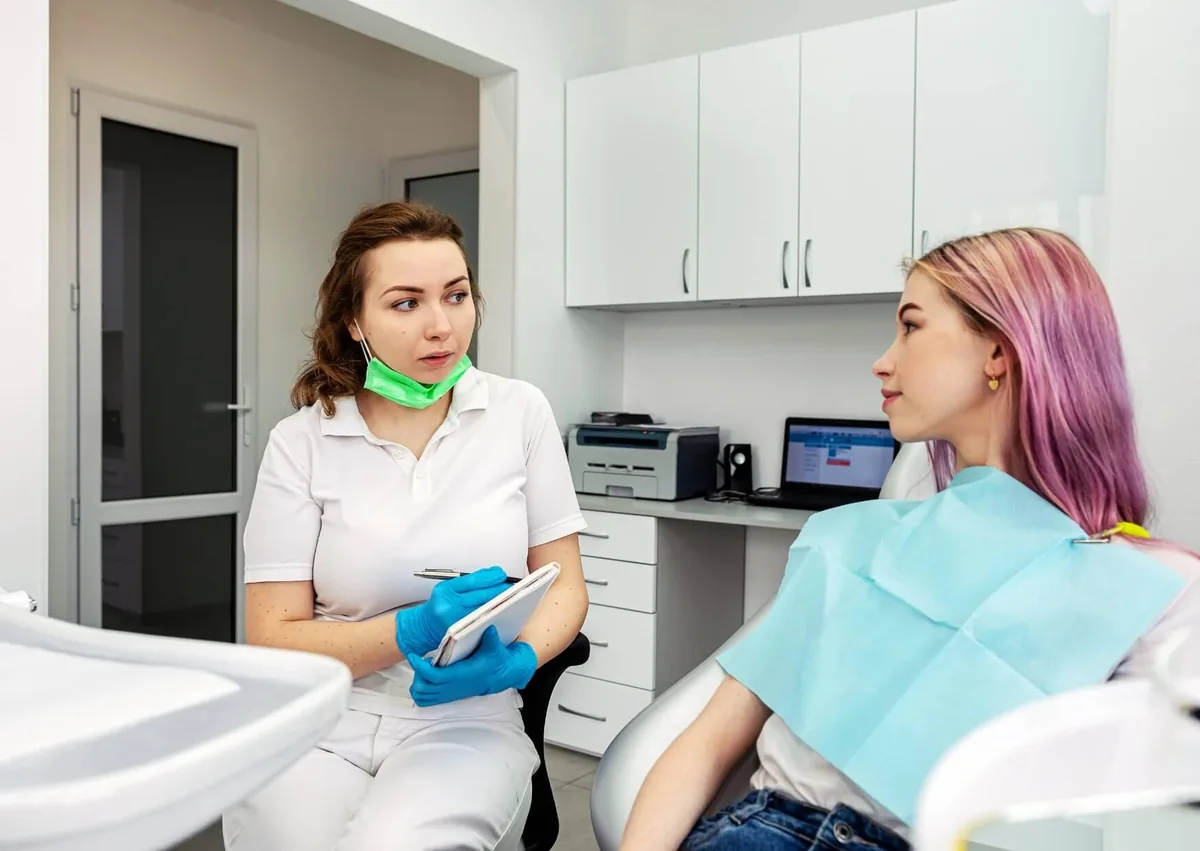
Before treatment begins, the team confirms consent, medications, fasting status when needed, transportation, and the planned implant sites. Monitoring depends on the sedation level and may include blood pressure, pulse oximetry, heart monitoring, and exhaled carbon dioxide measurement.
Once local anesthesia is working, the dentist prepares the bone and places the implant. Some implants receive a healing component right away, while others stay covered under the gum during early healing.
Sedation can reduce awareness, but it does not guarantee complete amnesia. You may remember sounds or brief parts of treatment without feeling pain, and if you are responsive, you should signal the team if you feel sharp discomfort.
Drowsiness, slower reactions, dizziness, nausea, and patchy memory can happen after deeper sedation. Follow the provider's restrictions on driving, work, exercise, alcohol, legal decisions, and operating equipment, even if you feel alert.
Swelling and soreness at the implant site often increase for the first few days and then begin to improve. Use only the pain-control plan and home-care instructions given for your case, and protect numb lips, cheeks, and tongue from accidental biting or hot foods.
Follow directions for brushing, rinsing, diet, activity, and any temporary prosthesis. Smoking and nicotine can reduce blood flow and healing, which raises the risk of implant failure.
Keep all follow-up visits so the dentist can check healing and implant stability. For a more detailed timeline and home-care guidance, see dental implant recovery.
The final crown or bridge is usually placed only after the implant has integrated with the bone. That process often takes several months and varies by location, bone quality, and whether grafting was needed.
Call 911 for trouble breathing, inability to wake normally, bluish or gray lips, chest pain, collapse, seizure, or severe confusion after sedation. Heavy bleeding that does not slow with the instructions you were given also needs urgent professional guidance.
Contact the dental office promptly for worsening swelling after initial improvement, fever, pus, severe or increasing pain, repeated vomiting, rash, a bad taste with drainage, or a loose implant or healing component. Rapidly expanding swelling of the face or neck, trouble swallowing, or trouble breathing is an emergency.
Most patients recover without serious problems when sedation is chosen carefully, monitored properly, and followed by responsible aftercare. A preoperative discussion can clarify the planned sedation depth, provider credentials, monitoring, transportation rules, expected costs, and recovery plan.
Talk with a provider about sedation options and a personalized implant plan so you know the expected recovery, monitoring, and transportation needs. Wagner Sleep Dental focuses on dental implants in Indianapolis, IN and Greenwood, IN; call (317) 881-4000 or book online to schedule a consultation.
Often, yes. Local anesthesia, nitrous oxide, oral sedation, and many forms of IV sedation allow spontaneous breathing and some ability to respond, although awareness and memory vary. General anesthesia causes unconsciousness.
No. Some patients do well with local anesthesia alone for a straightforward implant, while others benefit from sedation because of anxiety, medical or behavioral needs, treatment length, or surgical complexity.
Local anesthesia blocks surgical pain, while sedation reduces anxiety and awareness. You may still notice pressure or vibration, but sharp pain should be reported so the team can reassess the anesthesia.
Driving is usually not allowed after oral sedation, IV sedation, or general anesthesia. Restrictions after nitrous oxide vary, so leave only when the treating team confirms that you meet its discharge and transportation requirements.
Cost depends on the sedation method, procedure length, provider, facility, and insurance coverage. Ask for a written estimate that separates implant treatment, sedation or anesthesia, imaging, grafting, and the final restoration. If you want procedure-specific pricing, review single tooth implant cost and full mouth dental implants cost.
Jennifer, Dental Hygienist was thorough with my exam and cleaning! Thank You, Jennifer!

 Amber Nugent
I hadn't been to the dentist in 10 years and hadn't really smiled for about the same. Dr. Wagner and her staff made me feel comfortable instantly. She is not... read more
 Rachael Manson
This is my 4th cleaning day. I have never looked forward to getting dental work done but this is a very professional, friendly efficient practice. Now I look... read more
 Susan Fillmer
Well run office. They are very conscientious in helping individuals maintain healthy teeth.
 Roger Kinsey
Called in the morning and seen the same day for a lose crown. Dr. Wagner has always taken great care of our family dental needs!
 Kevin Gregory
I am so glad to see my dentist and Jennifer the hygenist! My name happens to be identical with the dentist, but I am just a patient! Jennifer... read more
 Susan Wagner
I have gone here for dental work my whole life at this point, and they have never been rude to me and have always been patient with me when I... read more
 nick lorance
Dr. Susan Wagner and her staff are amazing. They are very professional, gentle, efficient and experienced. They are also calm and very kind. I appreciate having such a great experience... read more
 Amy Tomey
Everything went well.. the staff is so friendly. Susan (the dentist) takes time to explain what all is going in and does not rush you out the door. ... read more
 Pam Stultz
Success stories that speak for themselves